

Free tool
WHOIS Lookup
Look up any domain: its registrar, expiry date and status codes, and whether it can be transferred or caught.
Check the whole domain at once: website, SSL, DNS and email →
WHOIS is the old way to ask who a domain is registered with and until when. RDAP is its replacement: the same registration data, served by the registry itself in a structured form, and since 2025 the official source for generic TLDs. This lookup asks the registry over RDAP directly, with no third-party database in between, and says so plainly when a registry does not answer or publishes nothing.
Beside the registration it checks the two things that most often go wrong around it: whether the nameservers the registry lists actually answer for the domain, and whether the DNSSEC record at the registry still matches the zone’s keys. A mismatch there takes a domain offline for a large share of the internet while it looks fine to everyone else.
Owner names and addresses are hidden for almost every domain since the GDPR, so this tool does not show them. It shows what is public and useful: registrar, dates, status, nameservers and the registrar’s abuse contact. Nothing you look up is stored.
Every domain you own, and the ones you want, in one place
InfraNest tracks your domains across registrars with their expiry, auto-renew and transfer lock, warns you before one lapses, and watches the names you want with Drop Catch.
- Expiry, auto-renew and transfer lock watched on every domain
- Transfers in and out, transfer code fetched for you
- Drop Catch: alerts, auto-register or backorder
- Every registrar and DNS provider in one list
Frequently asked questions
#What is the difference between WHOIS and RDAP?
Both answer the same question: who is this domain registered with, since when and until when. WHOIS is the original text protocol from the 1980s, with a different format at every registry. RDAP is its successor: structured data over HTTPS, with one format everywhere and a standard way to find the right registry. ICANN made RDAP the authoritative source for generic TLDs such as .com in 2025. Some country-code registries, .eu among them, still only offer their own lookup page.
#How do I transfer a domain to another registrar?
Switch off the transfer lock at the current registrar, ask it for the transfer code (also called auth code or EPP code), and start the transfer at the new registrar with that code. Generic TLDs refuse a transfer in the first 60 days after registration or a previous transfer, and it is safer not to start in the last days before expiry. This lookup checks all of that for you. The full steps are in our transfer guide.
#What do domain status codes like clientTransferProhibited mean?
clientTransferProhibited is a lock set by the registrar so the domain cannot be moved without the owner switching it off: normal and recommended. server… codes are the same kind of lock, set by the registry. redemptionPeriod means the domain expired and only the previous owner can still restore it, and pendingDelete means it will be released within days. Every code is explained in domain status codes.
#How does drop catching work?
An expired domain is not released straight away. It passes through a grace period, a redemption period of about 30 days and a pending-delete period of about five days, and is then deleted by the registry, at which point anyone can register it. Drop catching means trying to register it at that exact moment, which is a race against everyone else who wants it. InfraNest tries to register it the moment it is released, through your own registrar, and can add a backorder with a specialist service. No one can guarantee a catch. More in how to catch an expiring domain.
#Why does a domain show no expiry date?
Because its registry does not publish one. Several country-code registries, including .nl (SIDN) and .de (DENIC), keep the expiry date between the registrar and the owner, and the registration simply continues as long as it is paid. In that case only the registrar can tell you when it renews. Some TLDs, .eu for one, publish no RDAP data at all; the lookup then links to the registry’s own search.
From the blog
Compare registrar prices before you buy or renew a domain
Nov 9, 2026
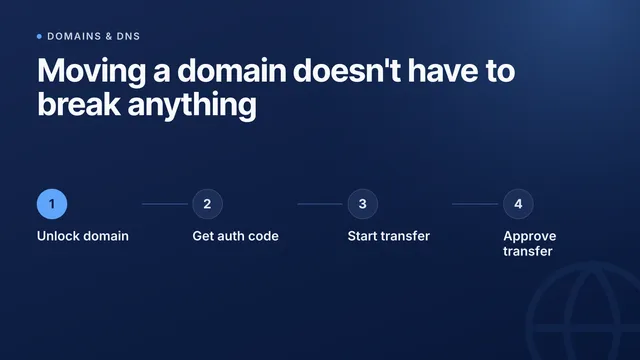
How to transfer a domain to another registrar, step by step
Oct 21, 2026
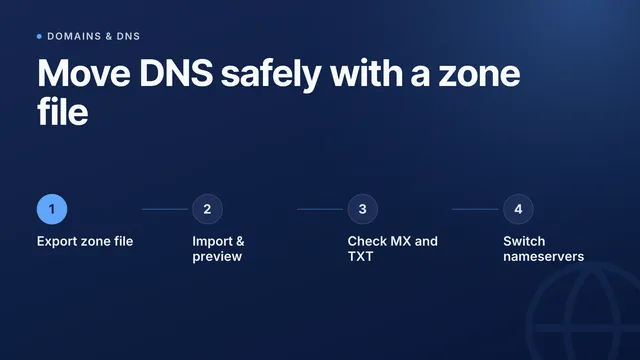
Move DNS between providers with a zone file
Sep 25, 2026
New guides on domains, registrars and drop catching
I’d like to receive product updates and new articles from InfraNest by email. I can unsubscribe at any time. Privacy policy
More free tools
One lookup is a snapshot
InfraNest keeps checking — across every domain you own — and tells you when the answer changes instead of when a customer does.
Free plan · No credit card required · Set up in minutes