

Learn how to check and improve a domain's security settings using the Security Advisor, and what other registrar actions are available from the same page. This is for anyone managing domains in InfraNest who wants to keep them safe from unauthorized changes.
Overview
- The Security Advisor reviews how well a domain is protected and highlights anything that needs your attention.
- Where your registrar and the domain's ending (TLD) support it, you can fix issues in one click, sent straight to your registrar.
- Only actions your registrar actually supports are shown — everything else is greyed out with an explanation.
Run the Security Advisor
- Open a domain from your Domains list.
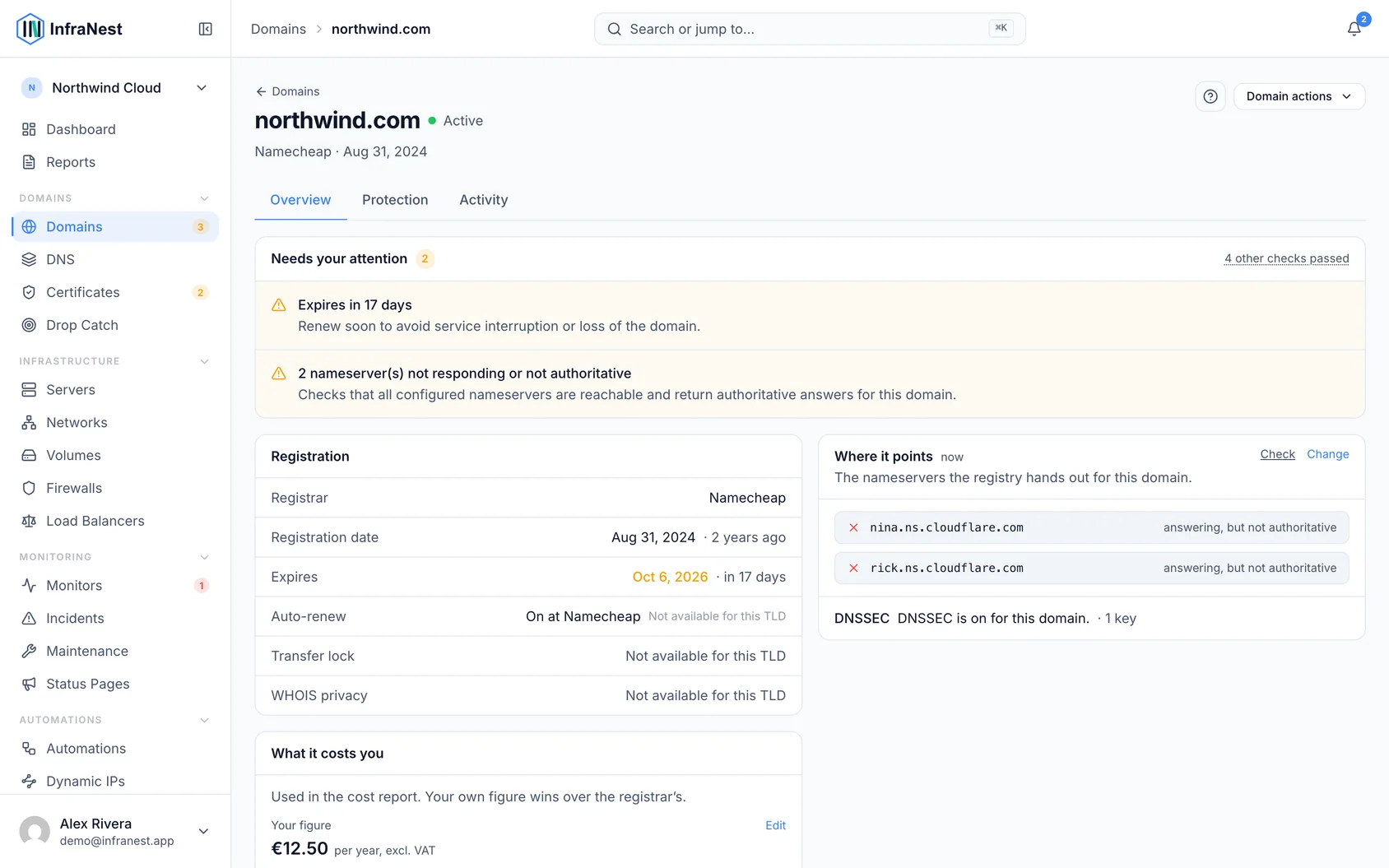
- Look at the Security Advisor panel. Each recommendation explains why it matters, and where supported, offers a one-click fix that's sent straight to your registrar.
What it checks
- Transfer lock — should be on, to stop anyone moving your domain away without permission.
- WHOIS privacy — should be on, to keep your personal details out of the public record.
- DNSSEC — recommended, to protect your DNS from tampering. It's set in two places and can take a domain offline if it goes wrong. See the article on turning on DNSSEC and what to do when it breaks for details.
- Auto-renew — recommended, so the domain isn't lost at expiry.
- Nameserver health — checks the domain's live nameservers for problems or unexpected changes.
Other registrar actions
- From the same domain page, you can change nameservers, edit contacts, manage DNSSEC, and get the EPP / auth code to move the domain elsewhere.
- Only the actions your registrar supports appear as active; the rest are greyed out with a reason shown alongside them.
NoteInfraNest watches for drift — if a domain's nameservers or status change outside InfraNest, it flags them so you can check.
Tips
TipTurn on both Transfer lock and WHOIS privacy first — they're the quickest wins for protecting a domain from unauthorized changes and keeping your personal details private.
Was this article helpful?
Related articles
About domainsInfraNest brings all your domains — from every registrar you connect — into one list, so you can see what you own, when each renews, and manage them without…Add and import domainsThere are a few ways to get your domains into InfraNest — and most appear on their own once you connect a registrar.Archive a domain you no longer ownTidy a finished domain out of your list without losing its history — and understand why archiving is not the same as cancelling.See what happened to your domainsThe Domain lifecycle report shows what happened to your domains in a month, quarter or year you choose — registrations, renewals, transfers in and out…