

A status page shows customers what's working, what's not, and how you're doing over time — this article is for anyone setting up or evaluating status pages in InfraNest.
Overview
- A status page turns your monitoring into a branded public page, on your own domain with automatic HTTPS, so customers can see what's up, what's degraded, your uptime, and your incident history.
- It's your single public source of truth during an outage, so support inboxes don't fill with "is it just me?" messages.
- It updates itself from your monitoring and can email subscribers automatically when there's an incident.
What it can show
Each of these is a toggle you control from the status page's settings:
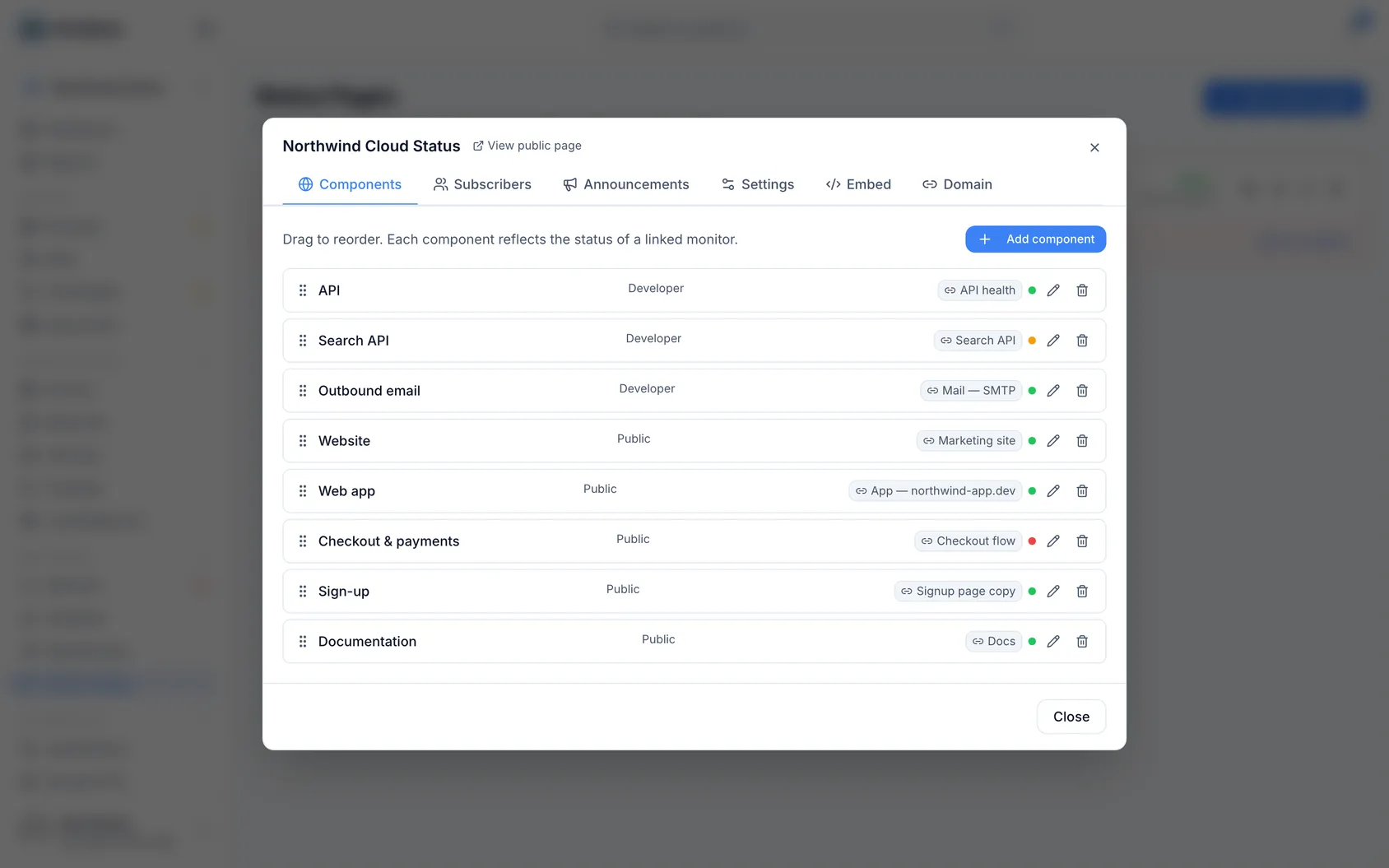
- Overall status banner — Operational, Degraded, or a Partial outage.
- Uptime percentage for each service, shown via Show uptime percentage.
- Incident history, controlled with Show incident history.
- Announcements you post yourself, under Announcements.
- Planned maintenance, shown as Under maintenance rather than counted as downtime.
- Third-party services you depend on, listed alongside your own under Third-party services.
Understand incident links
Every incident on your status page gets its own address automatically — you don't need to turn anything on.
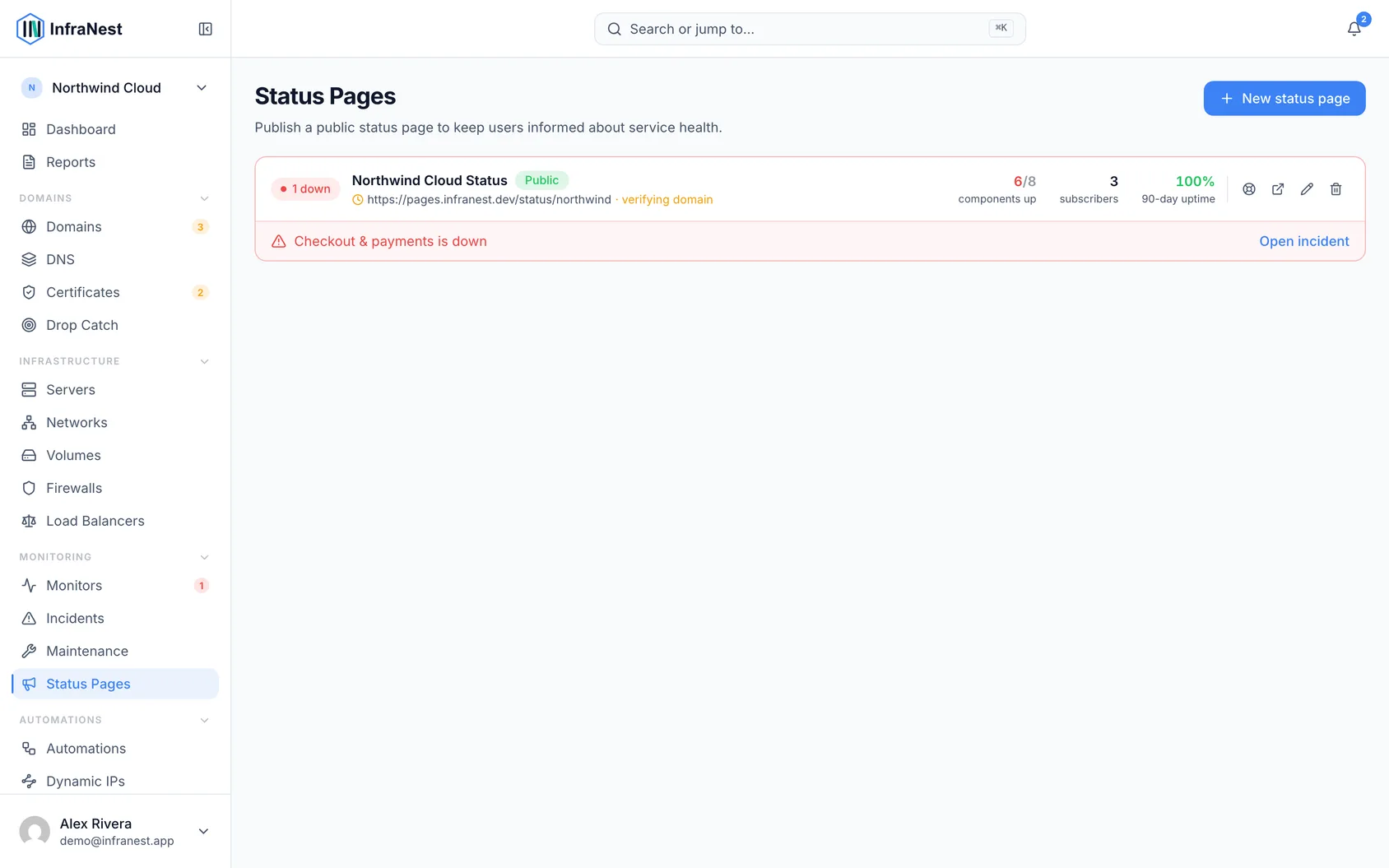
- Open any incident on your page, or click Open incident from an entry in your incident history, to get its dedicated link.
- Share that link in a support ticket, chat message, or email. Anyone who opens it lands straight on that one incident — what it affects, when it started, how long it ran, and every update posted, in order.
- At the bottom of the incident, check how the problem was found — usually your monitoring, along with how many of the checked regions detected it.
- Know that the link keeps working after the incident is resolved. Your status page itself stops talking about the outage once it's over, but the link you shared stays useful for as long as the ticket is open.
- If your page has Password protected turned on, the incident link will ask for that same password before showing anything, including the title.
NoteThe links your subscribers receive by email point straight at the specific incident, not at the front page of your status page.
Tips
TipBecause every incident has its own permanent link, it's worth pasting that link into support tickets rather than a general link to your status page — customers get the full timeline without you having to explain anything.
Was this article helpful?
Related articles
Use a custom domain for your status pageHost your status page on your own domain — like status.example.com — with HTTPS set up automatically.Create a status pageBuild a status page from the monitoring you already run — there's no data to update by hand.Make your status page look like yoursYour status page can match your colours, your spacing and your sections — without a designer.Status page subscribers and announcementsLet visitors subscribe to your status page for updates, and post announcements to keep everyone informed.