

Monitoring keeps an eye on your websites, APIs, servers, DNS and certificates, and lets you know when something goes wrong — this article is for anyone getting started with checks and status tracking in InfraNest.
Overview
- Watches your infrastructure from several regions and only alerts you once enough regions agree something is actually down, so a single flaky location won't wake you up for nothing.
- Keeps a record of incidents automatically, with a timeline you can review.
- Lets you schedule planned maintenance so expected work doesn't trigger alerts.
- Sends alerts to the destinations you choose, and can publish a public status page for your users.
What you can monitor
InfraNest can watch many different kinds of targets, including:
- Websites and APIs (HTTP / website monitoring, API monitor)
- Specific ports on a server (Port monitoring)
- SSL certificates, so you're warned before they expire
- DNS records (DNS monitoring)
- Keywords on a page (Keyword monitoring) or redirects (Redirect monitoring)
- Ping checks (Ping monitor) and scheduled jobs (Heartbeat / Cron monitor)
- Whole servers (Server monitoring)
- Other companies' status pages, so you know if a provider you depend on is having issues
Find your checks on the Monitoring page
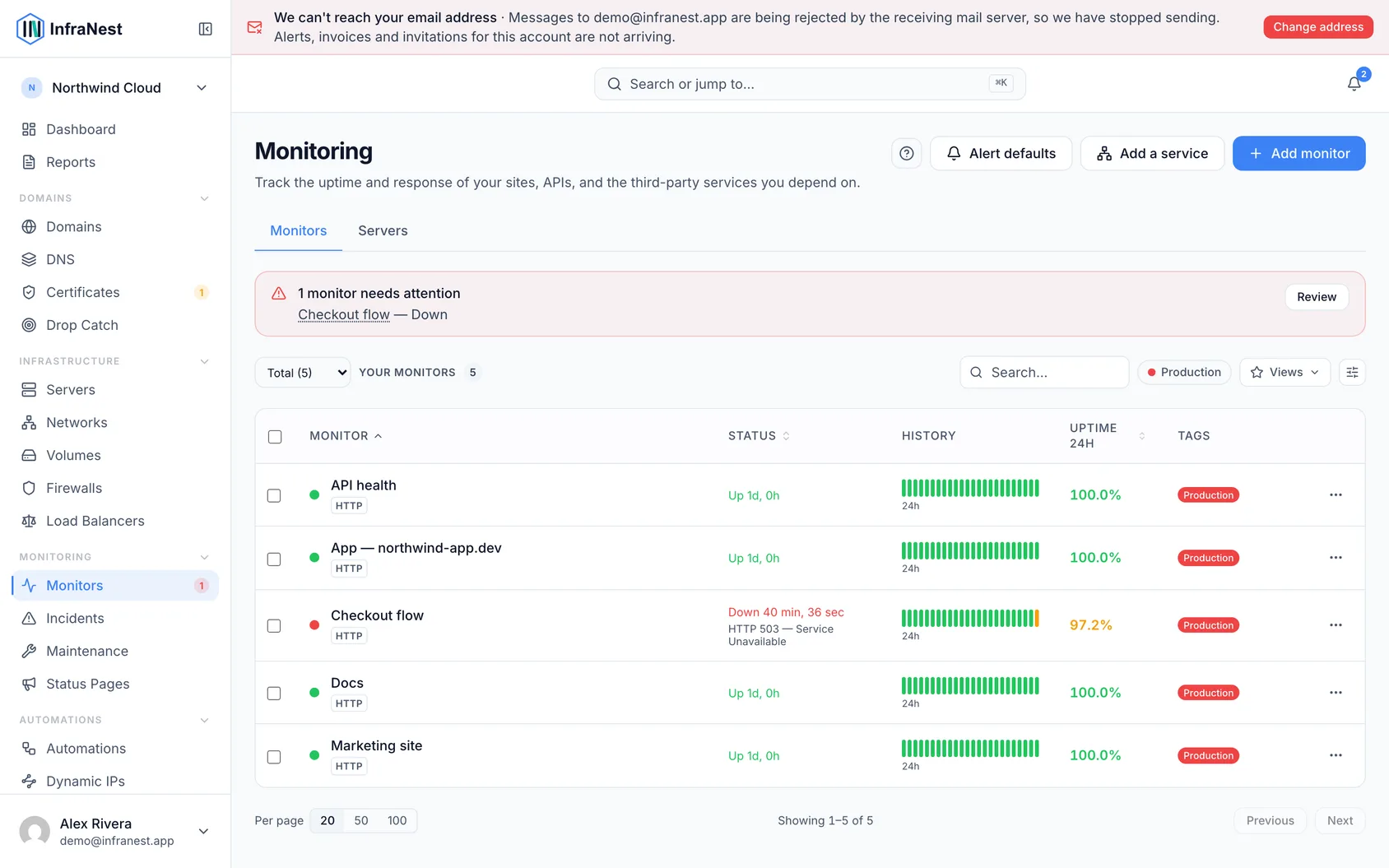
- Open Monitors from the sidebar.
- You'll see a list of all your checks along with their current Status — Up, Down, In maintenance, Silenced, or not yet checked — plus their Uptime 24h.
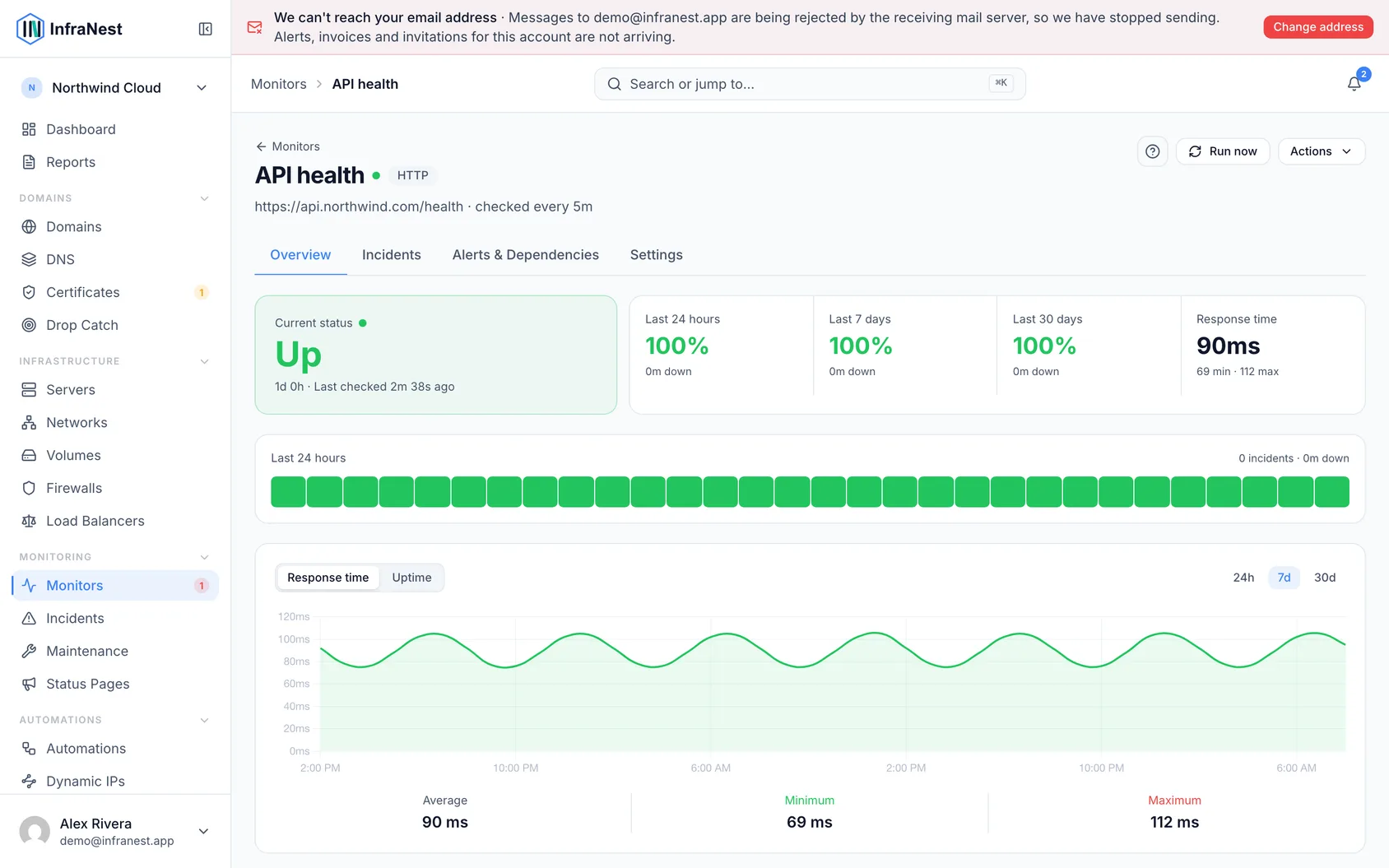
- Select any check to Open monitor and see its per-region results and History.
- To create a new check, select Add monitor (or Add a monitor / Create monitor, depending on where you start from).
NoteAn outage is only flagged once enough regions agree, so a single slow or unreachable region won't cause a false alarm.
Avoid unwanted alerts
- Set up Dependencies between monitors — for example, mark a Child monitors relationship — so a single root-cause outage doesn't trigger a storm of separate alerts.
- Schedule a maintenance window in Maintenance and mark it as Mark as expected / planned downtime, so planned work doesn't page you.
- Use Silence alerts (with Silence for a chosen duration) if you need quiet time without creating a maintenance window.
Route alerts and publish status
- Go to Alerts or Notifications to connect your destinations — email, Slack, Telegram, Teams, Discord, or a webhook.
- Open Notification policy on a monitor to control who gets notified and how.
- Visit Status Pages to Add to status page for the checks you want to make public, and publish a status page on your own domain.
TipOpen any monitor's Alerts & Dependencies tab to review both its alert routing and its dependencies in one place.
Was this article helpful?
Related articles
Add a monitorSet up a check to watch a website, API, certificate, DNS record or anything else, and get told when something's wrong.Monitor a cron job or scriptMost checks reach out to something of yours. A heartbeat monitor works the other way around: your backup script, cron job or scheduled task calls in to…Monitor typesInfraNest can watch ten different kinds of target. Pick the one that matches what you want to check.Monthly uptime reportGet uptime per monitor for a single calendar month — the figure you can send a client, because it stops changing once the month is over.